High risk for severe weather to erupt in the eastern US
The threat for severe thunderstorms packing damaging winds and tornadoes will ramp up Sunday into Monday across the central and eastern US
From torrential, flooding rain to snow to tornadoes and persistent gusty winds, AccuWeather’s Jon Porter breaks down the varied risks of a massive storm affecting hundreds of millions of Americans on March 16.
AccuWeather meteorologists are sounding the alarm for widespread severe risk stretching across the eastern United States into Monday night. States from Pennsylvania and New Jersey to Florida will be in the path of potentially damaging and dangerous thunderstorms.
As the Triple-Threat March Megastorm moves across the U.S., bringing blizzard conditions and high winds to parts of the Midwest, line segments of severe thunderstorms will stretch along the Arctic front as is moves to the coast into Monday night. Some of these thunderstorms will be capable of producing destructive winds, tornadoes and torrential downpours.

Severe thunderstorms rumbled across the central US Sunday
The severe risk began Sunday afternoon from Texas to southwestern Michigan as the front interacted with surging moisture streaming in from the Gulf.
A line of potent thunderstorms developed late Sunday afternoon and began to race east across the United States, bringing everything from damaging wind gusts and torrential downpours to hail and even a few tornadoes. The strongest wind gust reported so far was 77 mph in Minturn, Arkansas.
There were nearly 400 filtered reports of severe weather on Sunday and Sunday night, including more than 300 reports of high wind gusts.
As expected, the March Megastorm generated a slew of power outages from Wisconsin, Michigan and New York to Texas, Louisiana and Georgia. As of Monday morning, over 500,000 customers were without power across the United States, according to poweroutage.us.

High risk shifts to the coast Monday evening
As the front and associated line of thunderstorms move eastward towards the Eastern Seaboard, so will the risk of severe weather. At least 'some' risk for severe thunderstorms is expected from Florida to New Jersey and some of the coastal areas around New York.
The primary hazard once again will be widespread damaging straight-line wind gusts, but there can also be downpours and a few tornadoes. Winds can gust up to 80 mph with an AccuWeather Local StormMax™ of 100 mph.
"A few tornadoes, including the possibility of an especially intense tornado, cannot be ruled out, especially from near the Baltimore and Washington, D.C., metro areas through Virginia and into North Carolina," notes AccuWeather Chief Meteorologist Jon Porter.
Have the app? Unlock AccuWeather Alerts™ with Premium+
Severe storms could coincide with the evening commute in many metro areas, including Philadelphia, Washington, D.C., and Richmond, Virginia, further slowing travel times, especially where there are downed trees or power lines. Downpours reducing visibility and causing ponding on roadways can also impact the evening commute. Ground stops can also occur at airports throughout the region.

Torrential downpours to lead to flash flooding
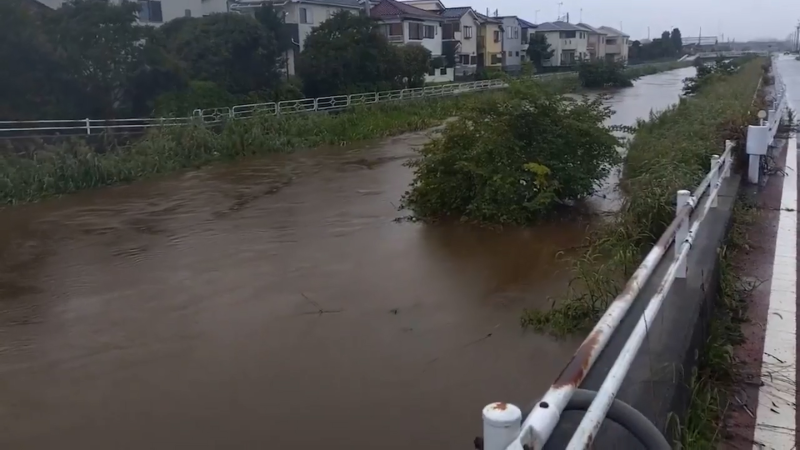
A pipeline of tropical moisture, all the way from the Caribbean will funnel rain northward along the Atlantic Seaboard into Monday night.
"The rainfall in this zone can easily reach 1-2 inches per hour," AccuWeather Senior Meteorologist Alex Sosnowski said.

"If it were not for the brevity of the storm, there would be widespread major flooding. However, even a brief period of intense rain such as this will lead to urban flooding problems along the Interstate 95 corridor and especially in the zone from New York City to Providence, Rhode Island and Boston," Sosnowski said.
The AccuWeather Local StormMax™ rainfall for this storm in the East is 6 inches.


Want next-level safety, ad-free? Unlock advanced, hyperlocal severe weather alerts when you subscribe to Premium+ on the AccuWeather app. AccuWeather Alerts™ are prompted by our expert meteorologists who monitor and analyze dangerous weather risks 24/7 to keep you and your family safer.
Report a Typo