Why Minutes of Advance Notice Change Everything in Severe Weather
Lead time is not just a measure of how early a forecast is made. It is a measure of how much time people have to take action.
>>Learn more about AccuWeather For Business

UNION CITY, MICHIGAN - MARCH 7: Downed trees are seen following a tornado that hit several cities in rural southwest Michigan on March 7, 2026 in Union City, Michigan. Several people were killed and about a dozen others were injured by the storm in Union City. (Photo by Bill Pugliano/Getty Images)
What Is Lead Time?
Lead time is not just a measure of how early a forecast is made. It is a measure of how much time people have to take meaningful protective action. A warning issued 30 minutes in advance has no practical value if it never reaches the people in its path. Conversely, a warning delivered with only 10 minutes of lead time, but communicated clearly and received by the right people, can set off a chain of life-saving decisions.
Some tornadoes, especially those spawned by fast-moving squall lines or at night, still produce warning times measured in single digits — or no warning at all. The science of lead time is really the science of chasing down those outliers and understanding why some events resist early detection.
>> AccuWeather SkyGuard® Severe Weather Warnings better protect people and property when severe weather threatens. Each warning is communicated instantly with AccuWeather’s proven Superior Accuracy™ through multiple channels and dissemination methods, all customized to your specific needs. >>

THREE RIVERS, MICHIGAN - MARCH 7: Storm damage is seen after a tornado hit Three Rivers and several other cities in rural southwest Michigan on March 7, 2026 in Three Rivers, Michigan. Several people were killed and about a dozen others were injured by the storm in Union City. (Photo by Bill Pugliano/Getty Images)
The Challenges of Flash Flooding
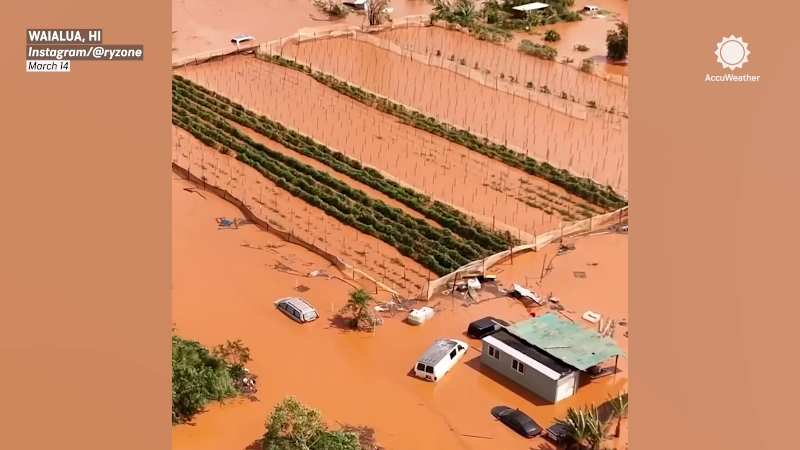
Tornadoes capture public attention, but flash floods are the deadliest severe weather hazard in the United States by total fatalities.
Flash flood lead times are often shorter and less reliable than tornado lead times, as flash flood forecasting remains an area where the science still has significant room to grow.
<<Why take unnecessary risks? Contact AccuWeather today to get AccuWeather's SkyGuard® Severe Weather Warnings to better prepare your business and keep your employees safer for all severe weather threats.>>

UNION CITY, MICHIGAN - MARCH 7: Damage and debris are seen along Tuttle Road following a tornado that hit several cities in rural southwest Michigan on March 7, 2026 in Union City, Michigan. Several people were killed and about a dozen others were injured by the storm in Union City. (Photo by Bill Pugliano/Getty Images)
Forecasting Days in Advance
Most of the discussion around lead time focuses on the final hour before a severe weather event. But there is a longer version of the same challenge playing out at the days-to-weeks timescale, and it carries its own profound implications.
Ensemble forecast models — systems that run dozens of slightly different simulations simultaneously and look for consensus in their outputs — have made it possible to identify the broad atmospheric setups that favor severe weather outbreaks several days in advance. When a deep trough is expected to dig into the central plains in five days, meteorologists can begin communicating elevated severe weather risk to emergency managers and the public well before any individual storm has formed. That communication allows school districts to reconsider field trip schedules, event organizers to prepare contingency plans, and hospitals to staff up for potential trauma surges.

UNION CITY, MICHIGAN - MARCH 7: Debris is wrapped around a tree following a tornado that hit several cities in rural southwest Michigan on March 7, 2026 in Union City, Michigan. Several people were killed and about a dozen others were injured by the storm in Union City. (Photo by Bill Pugliano/Getty Images)
This extended situational awareness does not eliminate the need for short-fuse warnings when storms actually develop, but it changes the psychological and logistical landscape in which those warnings are received. People who have been mentally prepared for the possibility of severe weather over several days are demonstrably more likely to respond quickly and appropriately when a warning arrives. They have already mentally rehearsed the response sequence that researchers identify as the key to effective protective action.
Why Lead Time Is Never Just a Technical Problem
People discount warnings that have not materialized in their recent memory. They delay action when they cannot see visible signs of danger with their own eyes. They are more likely to take shelter when a trusted neighbor is also heading for the basement than when they receive an abstract alert on a screen. They are less likely to respond to warnings issued in the middle of the night, when they are asleep. They are far less likely to respond effectively if they do not speak the language in which the warning is written.
All of these behavioral realities mean that the true value of a warning is not the number of minutes of lead time it provides — it is the number of those minutes that translate into protective action for the people most at risk.
The next time a tornado warning appears on your phone, and you feel the small jolt of adrenaline that prompts you to look out the window and then walk toward your basement stairs — that jolt, and the steps that follow it, are the product of decades of scientific work. The people who made it possible spent their careers trying to give you a few more minutes. Use them well.
AccuWeather’s SkyGuard® Severe Weather Warnings
Be proactive with AccuWeather SkyGuard® Severe Weather Warnings with proven Superior Accuracy™ AccuWeather’s SkyGuard warnings deliver hyperlocal, site-specific alerts and warnings with often more advance notice, before severe weather hits, giving you more time to prepare.
As an example of AccuWeather’s proven Superior Accuracy™, for tornadoes, on average, AccuWeather provides 16 minutes of advance notice compared to an average of only eight minutes from the National Weather Service. In some cases, we often provide much more advance notice.
Businesses that invest in AccuWeather’s SkyGuard Severe Weather Warnings also get access to a team of expert severe weather meteorologists, 24x7x365. AccuWeather does not just send you a warning; we confirm that you have received it, so you can make the best weather-impacted decisions for your business every time.
<<Why take unnecessary risks? Contact AccuWeather today to get AccuWeather's SkyGuard® Severe Weather Warnings to better prepare your business and keep your employees safer for all severe weather threats.>>
Report a Typo