Go Back
  • For Business
  • |
  • Warnings
  • Data Suite
  • Forensics
  • Advertising
  • Superior Accuracy™
See where freezes are a concern for the Northeast, Midwest. Click here. Chevron right

Columbus, OH

46°F
Location Chevron down
Location News Videos
Use Current Location
Recent

Columbus

Ohio

46°
No results found.
Try searching for a city, zip code or point of interest.
Create Your Account Unlock extended daily and hourly forecasts — all with your free account.
Let's Go Chevron right
Have an account already? Log In
settings
Help
Columbus, OH Weather
Today WinterCast Local {stormName} Tracker Hourly 10-Day Radar MinuteCast® Monthly Air Quality Health & Activities

Around the Globe

Hurricane Tracker

Severe Weather

Radar & Maps

News

News & Features

Astronomy

Business

Climate

Health

Recreation

Sports

Travel

For Business

Warnings

Data Suite

Forensics

Advertising

Superior Accuracy™

Video

Winter Center

Top Stories Severe Weather Hurricane Center Astronomy Climate Recreation Trending Today Health In Memoriam Case Studies Blogs & Webinars
Freeze Warning

Weather Blogs / Astronomy

A Detailed Look at the Leonids Meteor Shower Which Peaks This Week

By Dave Samuhel, AccuWeather senior meteorologist

Published Nov 15, 2015 7:00 PM EDT | Updated Nov 15, 2015 7:11 PM EDT

Copied
640x360_11152201_17-leonids-facts-2015-hd

The Leonids meteor shower is already underway. The shower peaks Tuesday night into Wednesday morning. 20 meteors per hour are likely through the peak, which makes it more active than the recent Taurid shower.

640x360_11152203_17-18-leonids-2015-hd-(1)

The meteors radiate from the Leo constellation in the northeastern part of the sky. The radiant point will be highest in the sky after midnight. This year will feature great viewing conditions as the moon (nearly at first quarter) sets before midnight. But, the weather will throw us more than a few curveballs.

640x426_11152209_page

A serious storm will be impacting the country with heavy rain and even some snow Tuesday night. Read the details on the storm here.

Again don't wait until Tuesday night to look for the meteors! The peak of the Leonids is not as important this year as it has been in years past when the shower is very active. Look tonight for some!

Latest U.S. Satellite Imagery

isaeun

History of the LeonidsThe Leonids have an amazing history. The parent comet (55P/Tempel-Tuttle) makes fairly frequent passes through the inner solar system. This lays out fresh debris in the path of the Earth’s orbit every 33 years.

640x426_11152223_meteor-shower-defined

This shower has turned into a raging meteor storm in the past. In fact, you could stay that the Leonids have produced the most impressive shows in recorded history. The years of enhanced activity have been pretty well calculated in advance. But, the bad news is that a “storm” is not expected with the 2015 Leonids.

It is not necessarily the fresh passage of Comet 55P/Tempel Tuttle that sets the stage for a meteor storm. But, it is the repeated passage over the same areas that leaves an extra thick cloud of debris for the Earth to pass through. Lets take a look at some of the historic meteor storm years for the Leonids.

I personally witnessed the most recent storm. It was 2001, my first year working for AccuWeather.com. I got off of work around 3AM, and headed outside to watch for meteors. I was shocked with how active it was. I observed what seemed to be several meteors at once in the sky all night log. But, the 2001 show pales in comparison to 1966 and 1833.

640x426_11152254_meteors,-tips-for-spotting

In 1966, the Leonids produced one of the most impressive shows of all time. The most impressive display was across the Western U.S. Here is a quote from a space.com article about that night.

Perhaps the best views were from California and Arizona. At the Table Mountain Observatory, near Wrightwood, Calif., one resident astronomer commented that he and a colleague, " ... watched a rain of meteors, turn into a hail of meteors and finally a storm of meteors, too numerous to count by 3:50 a.m. Pacific Time. Instinctively, we sought to shield our upturned faces from imagined celestial debris."

From 6,850-foot Kitt Peak in southern Arizona, thirteen amateur astronomers were trying to guess how many could be seen by a sweep of their heads in one second. The consensus of the group was that the peak occurred at 4:54 a.m. Mountain Time, when the staggering rate of 40 per second (144,000 per hour) was reached!

The Leonids storm of 1833 was probably the the most intense meteor storm in recorded history. Here is an account of the event.

350x535_11152230_leonids-1833
Report a Typo

Weather News

Winter Weather

Grab the jackets again as cold air, freezes return to the Northeast

Apr. 19, 2026
video

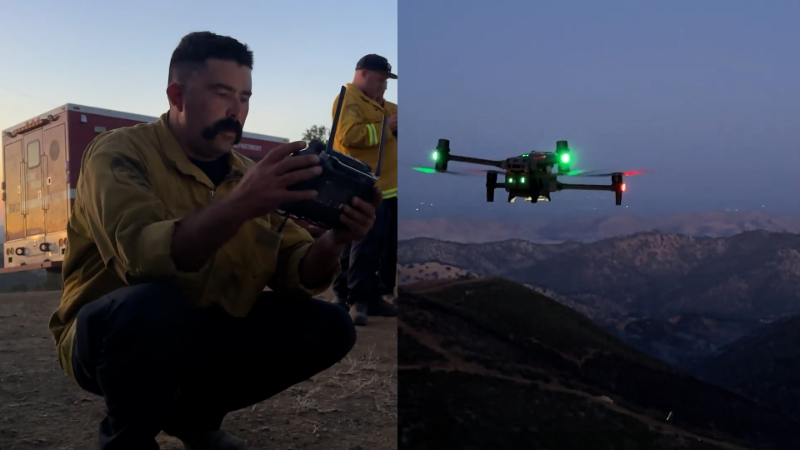
CAL FIRE utilizing drones to help fight fires

Apr. 16, 2026
video

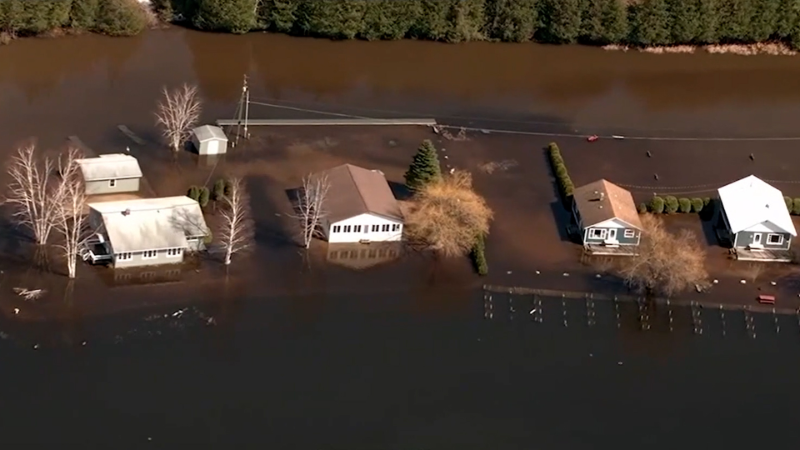
Floodwaters surge through Michigan and Wisconsin

Apr. 16, 2026
Show more Show less Chevron down

Topics

Top Stories

Severe Weather

Hurricane Center

Astronomy

Climate

Recreation

Trending Today

Health

In Memoriam

Case Studies

Blogs & Webinars

ABOUT THIS BLOG
Astronomy
Dave Samuhel
Dave Samuhel discusses stargazing and how weather affects viewing conditions of astronomical phenomena.
  • Astronomy
    with Dave Samuhel
  • Canadian weather
    with Brett Anderson
  • Global climate change
    with Brett Anderson
  • Global weather
    with Jason Nicholls
  • Northeast US weather
    with Elliot Abrams
  • Plume Labs on Air Quality
    with Tyler Knowlton
  • RealImpact of weather
    with Dr. Joel N. Myers
  • WeatherMatrix
    with Jesse Ferrell
  • Western US weather
    with Brian Thompson

Featured Stories

Astronomy

Lyrids 2026: How to see the 1st meteor shower since January

1 day ago

Weather News

Evacuations, rescues underway as flooding continues in Wisconsin, Mich...

1 day ago

Weather News

Falling ice chunk crashes through roof, lands on living room couch

2 days ago

Weather News

7-month-old dies after being found in hot car in Tennessee

2 days ago

Weather News

114 years later: How weather helped seal the Titanic’s fate

3 days ago

AccuWeather Weather Blogs A Detailed Look at the Leonids Meteor Shower Which Peaks This Week
Company
Proven Superior Accuracy™ About AccuWeather Digital Advertising Careers Press Contact Us
Products & Services
For Business For Partners For Advertising AccuWeather APIs AccuWeather Connect Personal Weather Stations
Apps & Downloads
iPhone App Android App See all Apps & Downloads
Subscription Services
AccuWeather Premium AccuWeather Professional
More
AccuWeather Ready Business Health Hurricane Leisure and Recreation Severe Weather Space and Astronomy Sports Travel Weather News Winter Center
Company
Proven Superior Accuracy™ About AccuWeather Digital Advertising Careers Press Contact Us
Products & Services
For Business For Partners For Advertising AccuWeather APIs AccuWeather Connect Personal Weather Stations
Apps & Downloads
iPhone App Android App See all Apps & Downloads
Subscription Services
AccuWeather Premium AccuWeather Professional
More
AccuWeather Ready Business Health Hurricane Leisure and Recreation Severe Weather Space and Astronomy Sports Travel Weather News Winter Center
© 2026 AccuWeather, Inc. "AccuWeather" and sun design are registered trademarks of AccuWeather, Inc. All Rights Reserved.
Terms of Use | Privacy Policy | Cookie Policy | About Your Privacy Do Not Sell or Share My Personal Information | Data Sources

...

...

...