Go Back
  • For Business
  • |
  • Warnings
  • Data Suite
  • Forensics
  • Advertising
  • Superior Accuracy™
Pacific hurricane season activity ends. Click for details on the record-shattering season. Chevron right
Back-to-back storms to bring additional rain, mountain snow into the West Coast. Click for the forecast. Chevron right

Columbus, OH

45°F
Location Chevron down
Location News Videos
Use Current Location
Recent

Columbus

Ohio

45°
No results found.
Try searching for a city, zip code or point of interest.
Get Premium+
Create Your Account Unlock extended daily and hourly forecasts — all with your free account.
Let's Go Chevron right
Have an account already? Log In
settings
Help
Columbus, OH Weather
Today WinterCast Local {stormName} Tracker Hourly 10-Day Radar MinuteCast® Monthly Air Quality Health & Activities

Around the Globe

Hurricane Tracker

Severe Weather

Radar & Maps

News

News & Features

Astronomy

Business

Climate

Health

Recreation

Sports

Travel

For Business

Warnings

Data Suite

Forensics

Advertising

Superior Accuracy™

Video

Winter Center

Top Stories Severe Weather Hurricane Center Astronomy Heat Alert Climate Recreation Trending Today Health In Memoriam Case Studies Blogs & Webinars

News / Astronomy

Super Thunder Moon to shine bright in night sky

The first full moon of astronomical summer and the second supermoon of 2022 will be one of the biggest and brightest of the year.

By Brian Lada, AccuWeather meteorologist

Published Jul 8, 2022 8:48 AM EST | Updated Jul 8, 2022 3:31 PM EST

Copied

July's full moon is known as the Thunder Moon. It will also be the second of three supermoons in 2022 as well as the first full moon of astronomical summer.

Summer is in full swing across North America with the mild nights drawing more people outside to enjoy the star-speckled sky and, with a bit of luck, a glimpse of a shooting star streaking overhead. But just before the middle of July, the attention of stargazers will shift to the moon as a popular astronomical event takes center stage in the night sky.

As the sun sets on Wednesday, July 13, a supermoon will rise, shining brighter than many other full moons throughout the year.

The upcoming supermoon will also be the first full moon of astronomical summer, which started on June 21 at 5:13 a.m. EDT.

Lightning strikes next to the moon on Aug. 12, 2019. (Jakub Hałun)

The term supermoon is more than a viral nickname. As the moon orbits the Earth, there are periods during which it is closer to the Earth and times when it is farther away. When a full moon coincides with the time when the moon is close to the Earth, it creates a supermoon that appears slightly bigger and brighter than normal.

"Supermoons only happen three to four times a year and always appear consecutively," according to astronomers at NASA.

July's lunar spectacle will be the second edition of a supermoon trilogy in 2022. The first supermoon of the year rose in June and the third and final of the year will rise in August. After this summer, a supermoon will not shine again until Sept. 18, 2024.

When the moon is at perigee, it appears slightly bigger and brighter than at other points in its orbit. Image not to scale. (AccuWeather)

In addition to being a supermoon, July's full moon has no shortage of nicknames, including one inspired by summer weather.

Due to the thunderstorms that frequently rumble across North America in July, the month's full moon is sometimes referred to as the Thunder Moon, according to the Old Farmer's Almanac.

GET THE FREE ACCUWEATHER APP

  •      Have the app? Unlock AccuWeather Alerts™ with Premium+

Other full moon nicknames include the Buck Moon, the Hay Moon, the Berry Moon, the Halfway Summer Moon and the Salmon Moon.

The "Super Thunder Moon" will rise in the eastern sky right around sunset on Wednesday, July 13 -- and it won't be alone.

Saturn will rise in the same area of the sky shortly before midnight, local time, appearing just to the left of the moon. Night owls can also look for Jupiter and Mars in the eastern sky, which should appear above the horizon by around 2 a.m. local time.

The moon will sweep past these planets in the nights that follow, encountering Saturn early in the morning of July 16, followed by a pass near Jupiter on July 19 and an extremely close meet-up with Mars on July 21.

More Space and Astronomy:

Here’s how one astrophotographer captures such stunning lunar images
NASA rover spots human-made litter on Mars
Neil deGrasse Tyson sits down to talk about the stars, space travel

Want next-level safety, ad-free? Unlock advanced, hyperlocal severe weather alerts when you subscribe to Premium+ on the AccuWeather app. AccuWeather Alerts™ are prompted by our expert meteorologists who monitor and analyze dangerous weather risks 24/7 to keep you and your family safer.

Report a Typo

Weather News

Weather News

Rain, thunderstorms threaten search after deadly Brooklyn collapse

Nov. 12, 2026
Climate

Super El Niño officially arrives: What it means for US winter weather

Nov. 12, 2026
video

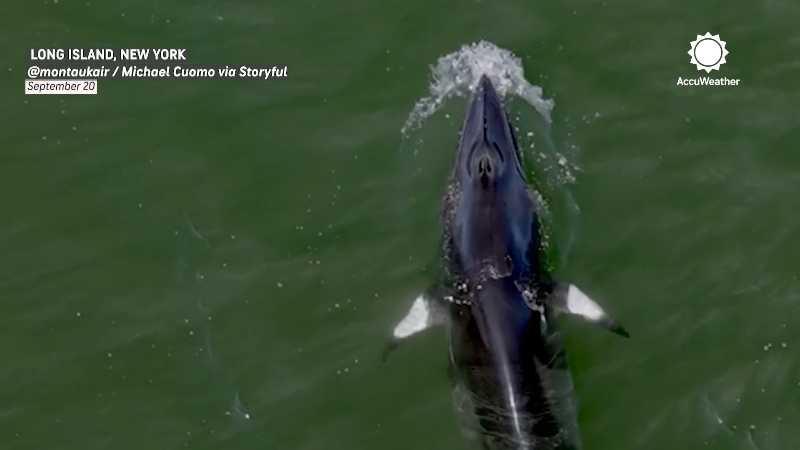
What’s bringing whales back to New York City waters?

Nov. 13, 2026
Show more Show less Chevron down

Topics

Top Stories

Severe Weather

Hurricane Center

Astronomy

Heat Alert

Climate

Recreation

Trending Today

Health

In Memoriam

Case Studies

Blogs & Webinars

Top Stories

Weather Forecasts

Back-to-back storms to bring heavy rain and feet of snow to the West

2 hours ago

Weather Forecasts

Persistent rain and coastal flooding to soak Florida’s east coast

2 hours ago

Weather Forecasts

New stretch of dry, sunny weather awaits Northeast after wintry weeken...

1 hour ago

Hurricane

Pacific hurricane activity ends after record season thanks to El Niño

1 day ago

Travel

Ground stop lifted after hourslong halt to US departures

1 day ago

More Stories

Featured Stories

Weather News

Alaska town will go 65 days without a sunrise

2 days ago

Severe Weather

Hail piles up like snow near Philadelphia as storms hit mid-Atlantic

22 hours ago

Recreation

Australia teen camper found alive after missing for 6 days

2 days ago

Crew takes first dive into the world’s newest artificial reef

1 day ago 0:49

Astronomy

Voyager 1 is nearing a light-day from Earth, NASA plans to celebrate

2 days ago

AccuWeather Astronomy Super Thunder Moon to shine bright in night sky
Company
Proven Superior Accuracy™ About AccuWeather Digital Advertising Careers Press Contact Us
Products & Services
For Business For Partners For Advertising AccuWeather APIs AccuWeather Connect Personal Weather Stations
Apps & Downloads
iPhone App Android App See all Apps & Downloads
Subscription Services
AccuWeather Premium AccuWeather Professional
More
AccuWeather Ready Business Health Hurricane Leisure and Recreation Severe Weather Space and Astronomy Sports Travel Weather News Winter Center
© 2026 AccuWeather, Inc. "AccuWeather" and sun design are registered trademarks of AccuWeather, Inc. All Rights Reserved.
Terms of Use | Privacy Policy | Cookie Policy | About Your Privacy Do Not Sell or Share My Personal Information | Data Sources

...

...

...