Autumnlike cooldown coming to over 20 states before Labor Day
Conditions more typical of late-September or October will make their presence known to much of the central and eastern United States ahead of Labor Day weekend.
RealFeel® uses additional factors to determine temperature besides humidity and wind speed. It takes into account 10 other factors, including the difference in how air feels in the sun and in shade.
A fall preview is coming for most of the central and eastern United States as cool air from Canada spreads to the south and east in the days ahead, AccuWeather meteorologists say.
The shift will help reduce energy demand as fewer households will need air conditioning, and many people may opt for jackets or long sleeves during the evening and overnight hours. The cooler pattern will also create more favorable conditions for outdoor work, sports camps and other strenuous activities.
A large southward dip in the jet stream will align with a high-pressure system moving out of Canada and spreading across the central and eastern U.S. thisweek, reaching around two dozen states.

Residents who open windows for fresh air during the day may need to close them at night, as temperatures will average 10-15 degrees below the historical average. In the coldest locations, the mercury could dip 25 degrees below the norm.
In the Midwest, cities, such as Minneapolis, are forecast to have multiple days with highs in the 60s and nighttime lows near 50. Temperatures will drop even lower in surrounding suburbs and rural areas. Chicago and Detroit are projected to have several days with highs near 70. Nighttime temperatures may dip into the 30s across the northern tier of the Midwest.
Some of the most significant temperature departures are forecast to settle over the Ohio Valley, Appalachians, mid-Atlantic and Southeast by the middle of this week.
If the sky is clear and winds diminish, low-temperature records could be challenged on Tuesday and Wednesday nights.

Cities along the Northeast's Interstate 95 corridor can expect multiple days with highs in the 70s to near 80 this week. Nighttime lows will hold in the 60s in urban centers but dip into the 50s in the suburbs, with some locations potentially dropping into the 40s.
Across the interior Northeast, lows in the 40s to near 50 will be common, while the coldest mountain locations may fall into the 30s.
Foggy mornings will be common during the autumlike weather pattern, with it being most widespread in river valleys and around lakes.
Even the Southeast will experience cooler weather. The most notable change, however, will be a drop in humidity levels, which are often uncomfortable at this time of year. In Atlanta, highs are forecast to remain in the lower 80s for several days this week, with nighttime lows in the low to mid-60s. Humidity levels may feel more typical of mid-October.

While heat and high humidity will persist along the immediate Gulf coast, a slight reduction in both may be noticeable for a couple of days this week.
Heavy to severe thunderstorms to mark cool transition
As the leading edge of cooler air advances, showers and heavier thunderstorms are expected to develop. Some of these storms could become severe, producing damaging wind gusts and torrential downpours capable of causing flash flooding.
The severe weather threat will shift eastward on Sunday, with storms capable of producing damaging wind gusts, hail and localized flash flooding from Vermont and northeastern New York to northern Georgia. In New York to Canada there is also a risk of isolated tornadoes.

In the wake of the severe thunderstorms, as cooler air flows over the relatively warm waters of the Great Lakes, clouds will build and showers will develop. This same lake-effect process produces flurries and snow squalls during the winter months.
In this case, waterspouts may form over some of the lakes. While often weak and short-lived, they can pose a hazard to small craft that venture too close.

The look of fall?
In locations that have experienced recent dry weather, some trees have become stressed enough that leaves are changing color and dropping well ahead of the usual autumn foliage peak.
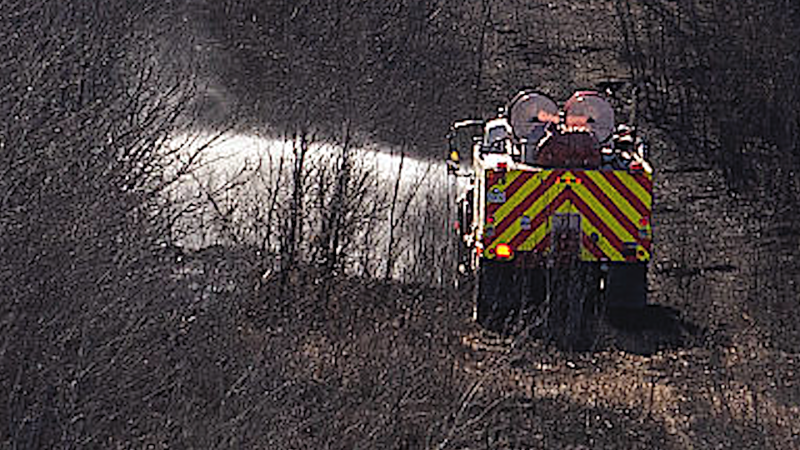
For those less enthusiastic about the autumnlike pattern, there is one benefit: Much less smoke is expected compared to earlier cool outbreaks this summer, as recent rainfall has reduced the number and extent of wildfires in central Canada.


Want next-level safety, ad-free? Unlock advanced, hyperlocal severe weather alerts when you subscribe to Premium+ on the AccuWeather app. AccuWeather Alerts™ are prompted by our expert meteorologists who monitor and analyze dangerous weather risks 24/7 to keep you and your family safer.
Report a Typo