Go Back
  • For Business
  • |
  • Warnings
  • Data Suite
  • Forensics
  • Advertising
  • Superior Accuracy™
Lala sweeps away 100 homes in Hawaii. Click for the latest. Chevron right

Columbus, OH

79°F
Location Chevron down
Location News Videos
Use Current Location
Recent

Columbus

Ohio

79°
No results found.
Try searching for a city, zip code or point of interest.
Get Premium+
Create Your Account Unlock extended daily and hourly forecasts — all with your free account.
Let's Go Chevron right
Have an account already? Log In
settings
Help
Columbus, OH Weather
Today WinterCast Local {stormName} Tracker Hourly 10-Day Radar MinuteCast® Monthly Air Quality Health & Activities

Around the Globe

Hurricane Tracker

Severe Weather

Radar & Maps

News

News & Features

Astronomy

Business

Climate

Health

Recreation

Sports

Travel

For Business

Warnings

Data Suite

Forensics

Advertising

Superior Accuracy™

Video

Winter Center

Top Stories Severe Weather Hurricane Center Astronomy Heat Alert Climate Recreation Trending Today Health In Memoriam Case Studies Blogs & Webinars

News / Astronomy

See a ‘lion’ hiding in stunning new Webb Space Telescope images

The James Webb Space Telescope reveals the Lion Nebula in remarkable new detail.

By Chloe Bland, AccuWeather, editorial intern

Published Aug 13, 2026 1:58 PM EDT | Updated Aug 13, 2026 1:58 PM EDT

Copied

The James Webb Space Telescope recently caught a rare sight, capturing the moment two neutron stars collided.

Dazzling new images taken by NASA's James Webb Space Telescope show an astronomical object known for its striking resemblance to a lion’s face.

NGC 2392, more commonly called the Lion Nebula, received its nickname from its hazy dust “mane” and the dying star at its center, which resembles a “button nose,” according to NASA. The images were taken by Webb, using its Near-Infrared Camera (NIRCam) and Mid-Infrared Instrument (MIRI). 

NASA’s James Webb Space Telescope imaged the planetary nebula NGC 2392, the Lion Nebula, using the observatory’s NIRCam and MIRI instruments. The central star’s remains are responsible for the nebula’s structure, including a lion face-shaped bubble of ionized gas and dust “mane.”

NASA’s James Webb Space Telescope imaged the planetary nebula NGC 2392, the Lion Nebula, using the observatory’s NIRCam and MIRI instruments. The central star’s remains are responsible for the nebula’s structure, including a lion face-shaped bubble of ionized gas and dust “mane.” (Credit: NASA, ESA, CSA, STScI; Image Processing: Alyssa Pagan (STScI))

NASA, ESA, CSA, STScI; Image Processing: Alyssa Pagan (STScI)

The agency previously captured images of the feline-themed planetary nebula in 2000 using the Hubble Space Telescope. Webb’s higher-resolution images show that the Lion Nebula continues to evolve. 

“Webb’s imagery ‘freezes’ this planetary nebula in time, though the star’s death, and its tumultuous effects, go on,” NASA said.

The current shape of the nebula’s “mane,” a collection of gas and dust, formed over several thousand years and is shaped by the stellar remnant at its core. The mane, which is the interior of a dust shell, is illuminated by this remnant, known as a white dwarf.  

NASA explained that a star begins to die when it can no longer sustain itself through nuclear reactions in its core. It then pulsates and sheds its outer layers, forming shells of dust and gas known as a planetary nebula. A “hot stellar core,” or white dwarf, remains after the star sheds its outer layers. 

“In the Lion Nebula’s case, the death of the oxygen-rich central star has left behind a white dwarf that is 'cooking' everything from the inside and producing a bubble of ionized gas as it does,” NASA said. “The gas bubble, which forms the lion’s face, is expanding over time and destroying dust that is in its path.” 

NASA’s James Webb Space Telescope’s mid-infrared image of planetary nebula NGC 2392, nicknamed the Lion Nebula, highlights the varying dust structures. Some dust is being destroyed by the dying central star’s radiation, while some dust filaments manage to survive.

NASA’s James Webb Space Telescope’s mid-infrared image of planetary nebula NGC 2392, nicknamed the Lion Nebula, highlights the varying dust structures. Some dust is being destroyed by the dying central star’s radiation, while some dust filaments manage to survive. (Credit: NASA, ESA, CSA, STScI; Image Processing: Alyssa Pagan (STScI))

NASA, ESA, CSA, STScI; Image Processing: Alyssa Pagan (STScI)

While the Lion Nebula will continue to change over time as dust and gas move away from the center, astronomers predict it will disperse in about 10,000 years, which experts note is “a relatively short period in astronomical terms.”  

The James Webb Space Telescope launched in December 2021 and arrived at the second Lagrange point (L2) in January the following year, according to NASA. The observatory studies every phase of the universe, from the Big Bang to the evolution of our solar system.  

More to explore:

Photos: Total solar eclipse captured over Spain, Iceland, Portugal
NASA astronaut leaves agency months after medical emergency in space
Stunning images reveal ‘whirlpools’ swirling across the sun
Report a Typo

Weather News

video

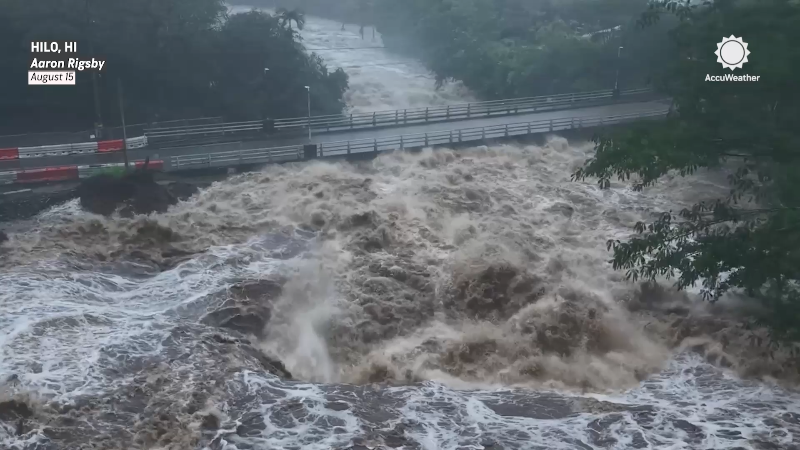
Raging floodwaters overtake bridge during Hurricane Lala

Aug. 16, 2026
video

Flash flooding from Hurricane Lala cuts off Hawaii communities

Aug. 17, 2026
video

Rescuers search for survivors in the rubble from destructive Indonesia...

Aug. 14, 2026
Show more Show less Chevron down

Topics

Top Stories

Severe Weather

Hurricane Center

Astronomy

Heat Alert

Climate

Recreation

Trending Today

Health

In Memoriam

Case Studies

Blogs & Webinars

Top Stories

Hurricane

Lala sweeps away 100 homes in Hawaii after brushing Big Island

5 hours ago

Climate

Lake Powell sinks to record low as Colorado River crisis deepens

1 hour ago

Flooding from Lala cuts off communities in Hawaii

10 hours ago 1:23

Weather News

New heat dome to build in western U.S., further exacerbating drought

45 minutes ago

Severe Weather

Severe storms to continue to prowl Plains, Midwest and East this week

40 minutes ago

More Stories

Featured Stories

Travel

Mount Etna eruptions cause major flight disruptions in Sicily

1 hour ago

Weather News

How deadly is quicksand, really? And how can you escape?

5 days ago

Weather News

Search for survivors continues after quake kills dozens in Indonesia

2 hours ago

Severe Weather

Flooding sweeps northern Indiana, breaking 113-year-old record

3 days ago

Astronomy

Stunning images reveal ‘whirlpools’ swirling across the sun

5 days ago

AccuWeather Astronomy See a ‘lion’ hiding in stunning new Webb Space Telescope images
Company
Proven Superior Accuracy™ About AccuWeather Digital Advertising Careers Press Contact Us
Products & Services
For Business For Partners For Advertising AccuWeather APIs AccuWeather Connect Personal Weather Stations
Apps & Downloads
iPhone App Android App See all Apps & Downloads
Subscription Services
AccuWeather Premium AccuWeather Professional
More
AccuWeather Ready Business Health Hurricane Leisure and Recreation Severe Weather Space and Astronomy Sports Travel Weather News Winter Center
Company
Proven Superior Accuracy™ About AccuWeather Digital Advertising Careers Press Contact Us
Products & Services
For Business For Partners For Advertising AccuWeather APIs AccuWeather Connect Personal Weather Stations
Apps & Downloads
iPhone App Android App See all Apps & Downloads
Subscription Services
AccuWeather Premium AccuWeather Professional
More
AccuWeather Ready Business Health Hurricane Leisure and Recreation Severe Weather Space and Astronomy Sports Travel Weather News Winter Center
© 2026 AccuWeather, Inc. "AccuWeather" and sun design are registered trademarks of AccuWeather, Inc. All Rights Reserved.
Terms of Use | Privacy Policy | Cookie Policy | About Your Privacy Do Not Sell or Share My Personal Information | Data Sources

...

...

...