St. Johns River smashes 73-year record in Florida, with flooding that could last into 2027
One of the slowest rivers in the world just set a new height record and flooding may linger until 2027.
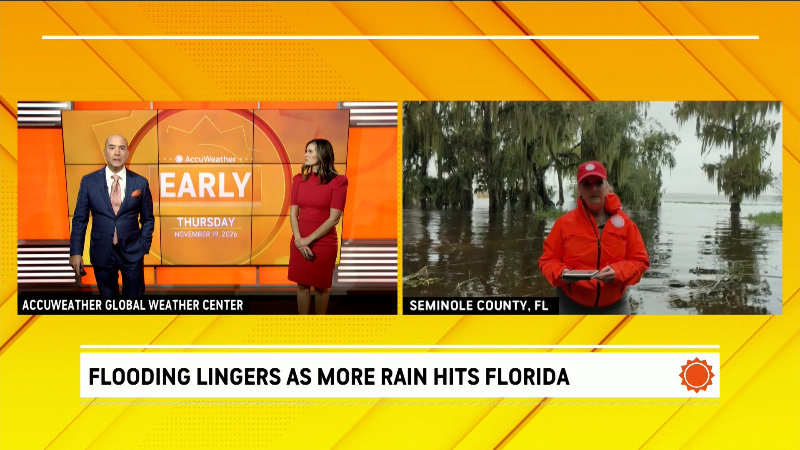
Serious flooding is already leading to rescues and cancellations, but the heavy rain causing it still has days to go.
The St. Johns River in Florida has exceeded its all-time high in Cocoa and could exceed the record farther downstream at Lake Harney or other locations in the coming days and weeks, as runoff slowly settles into the swampy basin.
On Thursday, the river near Cocoa hit 18.19 feet with an expected crest of 18.40 feet later in the day, smashing the previous record of 17.55 feet set on Oct. 11, 1953.

The Cocoa gauge has recorded water levels for 73 years.
AccuWeather meteorologists are still forecasting additional rain over the St. Johns basin through the end of the week and into the weekend, with the heaviest likely on Friday. After that, the developing coastal storm, moving northeastward, should begin to draw in drier air over the weekend.
Record flooding of the St. Johns and repeated rounds of storms have contributed to flash flooding in South and Central Florida where homes, roads and businesses are inundated.
Why St. Johns River flooding could linger into 2027
Major flooding near Cocoa, Florida, could linger through December, leaving some homes flooded for weeks. The Saint Johns River began flooding here on Nov. 2 and reached major flood stage on Nov. 9. It is likely to continue rising into Thanksgiving week — and at least minor flooding will probably still be occurring at Cocoa into January 2027. Roads, homes and businesses that are inundated could remain so for weeks on end.

The St. Johns River Water Management District said it began controlled releases through the S-96 structure into the C-54 Canal on Thursday to manage high water levels after historic rainfall.
The releases follow an emergency flood-control plan, with officials monitoring conditions and potential effects on downstream areas, including the Indian River Lagoon. Because water released through the C-54 Canal ultimately flows to the Lagoon, the District said it carefully evaluates both potential flooding and environmental impacts before initiating operations.
The last time discharges were necessary was during tropical storm events in 2017.
Why does the river take so long to drain?
As Florida's longest river, the St. Johns flows north for 310 miles toward Jacksonville and the Atlantic Ocean but drops less than 30 feet the entire way. That's only about an inch per mile. Water crawls through marshes and lakes, delaying its journey to the Atlantic. Farther north, tides and strong onshore winds can even reverse the flow.
As runoff slowly works downstream to the north, the painfully slow swell will pass east of Orlando and approach Jacksonville in the weeks ahead.
Report a Typo