Go Back
  • For Business
  • |
  • Warnings
  • Data Suite
  • Forensics
  • Advertising
  • Superior Accuracy™
Significant September Nor’easter is brewing for the East Coast. Click for details. Chevron right
Hurricane Polo becomes a Category 5 storm. Click for details. Chevron right

Columbus, OH

64°F
Location Chevron down
Location News Videos
Use Current Location
Recent

Columbus

Ohio

64°
No results found.
Try searching for a city, zip code or point of interest.
Get Premium+
Create Your Account Unlock extended daily and hourly forecasts — all with your free account.
Let's Go Chevron right
Have an account already? Log In
settings
Help
Columbus, OH Weather
Today WinterCast Local {stormName} Tracker Hourly 10-Day Radar MinuteCast® Monthly Air Quality Health & Activities

Around the Globe

Hurricane Tracker

Severe Weather

Radar & Maps

News

News & Features

Astronomy

Business

Climate

Health

Recreation

Sports

Travel

For Business

Warnings

Data Suite

Forensics

Advertising

Superior Accuracy™

Video

Winter Center

Top Stories Severe Weather Hurricane Center Astronomy Heat Alert Climate Recreation Trending Today Health In Memoriam Case Studies Blogs & Webinars

News / Weather News

7 different types of turbulence and how pilots navigate this nuisance while flying

By Chaffin Mitchell, AccuWeather staff writer

Copied

New reports warn air turbulence could become more common because of climate change, but according to experts, turbulence isn't usually something for airline passengers to worry about.

Air turbulence is air movement created by atmospheric pressure, jet streams, air around mountains, cold or warm weather fronts or thunderstorms. There are a number of different types of turbulence and it can be unexpected and happen when the sky appears to be clear.

According to airline pilot, curator of AskThePilot.com and author of Cockpit Confidential, Patrick Smith, conditions might be annoying and uncomfortable, but the plane is not going to crash.

"Turbulence is an aggravating nuisance for everybody, including the crew, but it’s also, for lack of a better term, normal. From a pilot’s perspective, it is ordinarily seen as a convenience issue, not a safety issue," Smith said.

Occasionally, turbulence has been responsible for injuries. For instance, passengers were injured flying over the Sierra Nevada in February 2019. However, most turbulence is well within what planes are designed to fly through and will not cause the plane to crash.

When a flight changes altitude in search of smoother conditions, Smith said this is by and large in the interest of comfort.

"The pilots aren’t worried about the wings falling off; they’re trying to keep their customers relaxed and everybody’s coffee where it belongs. Planes themselves are engineered to take a remarkable amount of punishment," Smith said.

airplane on dark stormy sky

An airplane is taking off under grey stormy clouds. (syaber/Getty Images/iStockphoto)

"Avoiding turbulence is a combination of art and science. We take our cues from weather charts, radar returns and those real-time reports from other aircraft. Larger carriers have their own meteorology departments, and we get periodic updates from the ground," Smith said.

AccuWeather Senior Meteorologist Jack Boston said even though you can't see turbulence, it can be predicted on a radar.

"Specialized hi-res doppler radar called TDWR (Terminal doppler weather radar) have been installed at/near numerous airports to detect sudden development of wind shear, which is a sudden change in wind direction or speed. Wind shear can threaten aircraft crashes at relatively low altitudes, during take-offs, approaches and landings," Boston said.

turbulence.png

Smith explained wake turbulence further and said it is something you can hear from inside the aircraft.

"With aircraft, this effect is exacerbated by a pair of vortices that spin from the wingtips. At the wings’ outermost extremities, the higher-pressure air beneath is drawn toward the lower pressure air on top, resulting in a tight, circular flow that trails behind the aircraft like a pronged pair of sideways tornadoes," Smith said.

The vortices are most pronounced when a plane is slow and the wings are working hardest to produce lift. Therefore, Smith said the prime time for an encountering them is during approach or departure.

RELATED:

For the nervous passenger: 5 flying myths debunked
Exploring the weather hazards behind 5 deadly, notorious plane crashes
Severe air turbulence could get 149% worse thanks to climate change

"When pilots pass on reports to other crews, turbulence is graded from light to extreme," Smith said.

copy-turbulence.jpg

Over the whole history of modern commercial aviation, the number of jetliner crashes caused by turbulence, even indirectly, can be counted on one hand, according to Smith.

"Each year worldwide, about a hundred people, half of them flight attendants, are hurt by turbulence seriously enough to require medical attention — head, neck, shoulder and ankle injuries being the most common," Smith said.

According to Smith, that works out to about 50 passengers out of the roughly 2 billion passengers who fly each year.

Report a Typo
Weather News

Weather News

Why meteorological, astronomical fall start on different dates

Sep. 21, 2026
video

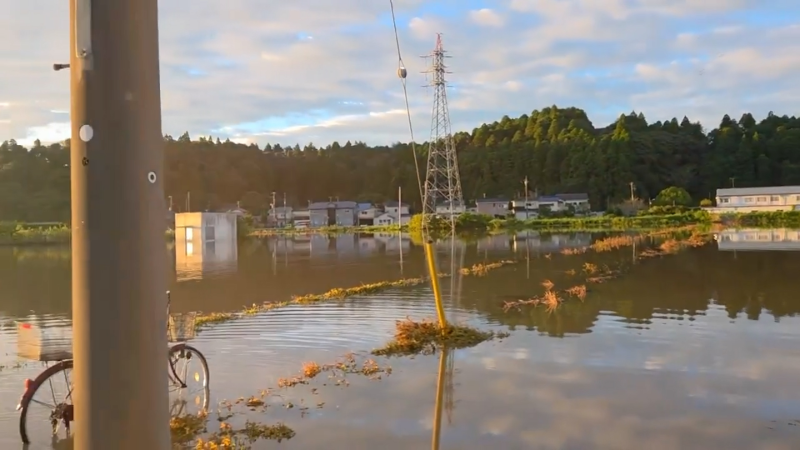
Flooding and landslides leave four dead in coastal Japan

Sep. 22, 2026
Weather News

2 pilots killed while battling Dome Fire in Yosemite

Sep. 22, 2026
Show more Show less Chevron down

Topics

Top Stories

Severe Weather

Hurricane Center

Astronomy

Heat Alert

Climate

Recreation

Trending Today

Health

In Memoriam

Case Studies

Blogs & Webinars

Top Stories

Weather Forecasts

Significant September Nor’easter: Upcoming storm surge, power outages

17 minutes ago

Hurricane

Polo becomes Category 5 hurricane threatening Mexico's Pacific coast

35 minutes ago

Hurricane

New tropical rainstorm threatens Hawaii with flooding, mudslides

2 hours ago

Hurricane

Atlantic breaks 60-year record with no hurricanes through Sept. 12

5 hours ago

Severe Weather

Rare high-elevation tornado in Utah mountains at 7,500 feet

1 day ago

More Stories

Featured Stories

Weather News

California under state of emergency ahead of 'historic' El Niño

2 hours ago

Astronomy

Harvest Moon 2026: When to see September’s full moon

1 day ago

Weather News

Lake Tahoe’s poisoned-pine mystery: $147,000 reward offered

1 day ago

Recreation

Body of missing hiker recovered in Washington's Olympic National Park

1 day ago

Weather News

These cities have had more 100+ degree days this year than ever

4 days ago

AccuWeather Weather News 7 different types of turbulence and how pilots navigate this nuisance while flying
Company
Proven Superior Accuracy™ About AccuWeather Digital Advertising Careers Press Contact Us
Products & Services
For Business For Partners For Advertising AccuWeather APIs AccuWeather Connect Personal Weather Stations
Apps & Downloads
iPhone App Android App See all Apps & Downloads
Subscription Services
AccuWeather Premium AccuWeather Professional
More
AccuWeather Ready Business Health Hurricane Leisure and Recreation Severe Weather Space and Astronomy Sports Travel Weather News Winter Center
Company
Proven Superior Accuracy™ About AccuWeather Digital Advertising Careers Press Contact Us
Products & Services
For Business For Partners For Advertising AccuWeather APIs AccuWeather Connect Personal Weather Stations
Apps & Downloads
iPhone App Android App See all Apps & Downloads
Subscription Services
AccuWeather Premium AccuWeather Professional
More
AccuWeather Ready Business Health Hurricane Leisure and Recreation Severe Weather Space and Astronomy Sports Travel Weather News Winter Center
© 2026 AccuWeather, Inc. "AccuWeather" and sun design are registered trademarks of AccuWeather, Inc. All Rights Reserved.
Terms of Use | Privacy Policy | Cookie Policy | About Your Privacy Do Not Sell or Share My Personal Information | Data Sources

...

...

...