Weather-fueled Spokane wildfires destroy 700 structures, force 60,000 to evacuate
Extreme fire weather, drought and wind fueled explosive fire growth as several blazes swept through eastern Washington.
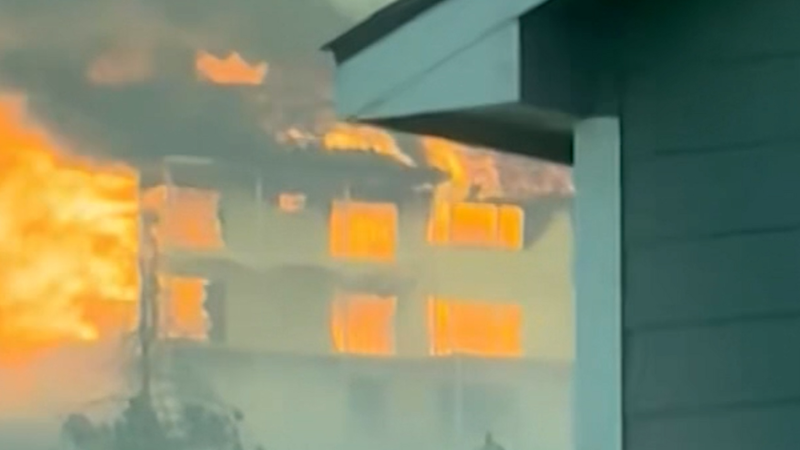
Dry conditions and powerful winds fueled a fast-moving wildfire that devastated parts of the Spokane, Washington, area on Aug. 1.
Fast-moving wildfires near Spokane, Washington, forced about 60,000 people to evacuate and damaged or destroyed at least 700 homes, businesses and other structures over the weekend, authorities said.
The Old Trails, Fairview and Autumn Lane fires burned more than 7,500 acres across Spokane and Stevens counties after igniting Saturday, according to the Washington Department of Natural Resources. The fires remained uncontained Sunday as crews assessed damage and worked to protect threatened communities.

A photo taken by the Spokane Valley Brush Truck 4 firefighters during its response to the Fairview Fire from Saturday into Sunday, on Aug. 3, 2026. (Image: Spokane Valley Fire Department)
The Old Trails Fire, the largest of the three, burned about 3,500 acres northwest of Spokane after rapidly spreading through grass and brush, crossing the Spokane River and reaching residential neighborhoods.
Spokane County Emergency Management Deputy Director Chandra Fox told CNN on Monday that of 700 hundred structures impacted, most are residential homes.

Chris Mutton, left, whose house burned in a wildfire speaks with Shane Maggart, Sunday, Aug. 2, 2026, in Spokane, Wash. (AP Photo/Young Kwak)
Patients were evacuated from the Mann-Grandstaff VA Medical Center, while thousands of customers lost power as fires damaged transmission lines. No deaths or serious injuries had been reported as of Sunday, but officials warned that damage assessments were continuing.
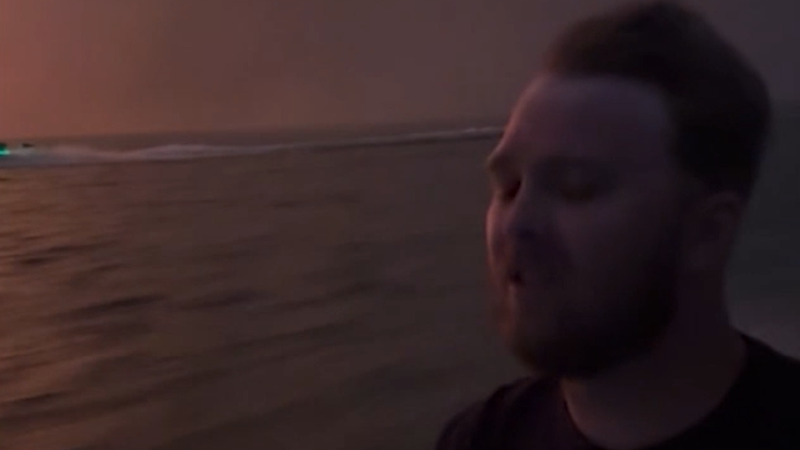
Cellphone video captures a couple and their two dogs fleeing the Mitre Rock Fire by boat in Fruitland, Washington, on Aug. 2, as wildfire smoke and flames spread near the water.
Spokane Deputy Fire Chief Kris Maynard described the devastation caused by the rapidly advancing flames.
“It’s a fire that just moved quickly as our crews went in,” Maynard said. “It’s something that hadn’t been seen before because of our dry conditions that we’ve had, but these winds that came through here quick. Firefighters were rushing through there, mainly just trying to save lives while also trying to save homes.”
Gov. Bob Ferguson declared a statewide wildfire emergency Saturday and imposed a ban on outdoor burning through Sept. 30.

Satellite images showing Spokane, Washington, on July 31, 2026, before the wildfires, and on Aug. 2, 2026, after fires burned through part of the city. (Planet Labs PBC)
Satellite images captured by Planet Labs on July 31 and Aug. 2 showed the dramatic burn scars around Spokane due to the wildfires.
What caused the rapid wildfire growth?

The causes of the Spokane-area fires remained under investigation. Lightning sparked many other fires burning across the Northwest, while additional dry thunderstorms could ignite new blazes with little or no rain, according to the Northwest Interagency Coordination Center and AccuWeather meteorologists.
A combination of prolonged drought, extremely dry vegetation, low humidity and powerful winds created an environment in which fires could spread rapidly. Additionally, wildfires across the Northwest are creating "dangerous" and "very unhealthy" air quality across the region.
The National Weather Service issued a rare “particularly dangerous situation” Red Flag Warning Saturday for parts of central and eastern Washington, including the Spokane area. Westerly winds reached 20-30 mph, with gusts as high as 45 mph.
Washington is experiencing its fourth consecutive statewide drought. More than 1,000 fires had burned approximately 425,000 acres across the state by the beginning of August, the most acreage burned since 2021, according to state officials.
Fox said a very warm winter with no snowpack has contributed to the fire activity.
"We did not have the snowpack that we normally have and so at this point, you know, we're here on the 3rd of August, and in terms of fuel load and fuel condition across the landscape. We're actually about 6 weeks ahead in terms of conditions," Fox said in an interview. "Where we're at today are conditions we normally see at the end of August or into September. So we're very concerned that not only are we under heightened risk, we're also potentially looking at fires well into October."
AccuWeather meteorologists said winds would ease somewhat early this week, but wildfire danger would remain very high across the Northwest because of dry vegetation and widespread drought.
“A heat dome is expected to strengthen over the Rockies later this week, bringing another round of extreme temperatures to parts of the Northwest,” AccuWeather Meteorologist Haley Taylor said. “High temperatures are expected to climb back into the 90s across much of the region, while coastal communities will remain cooler.”
Mostly dry weather into the middle of August could further worsen drought conditions and keep wildfire danger elevated across the region.
Report a Typo