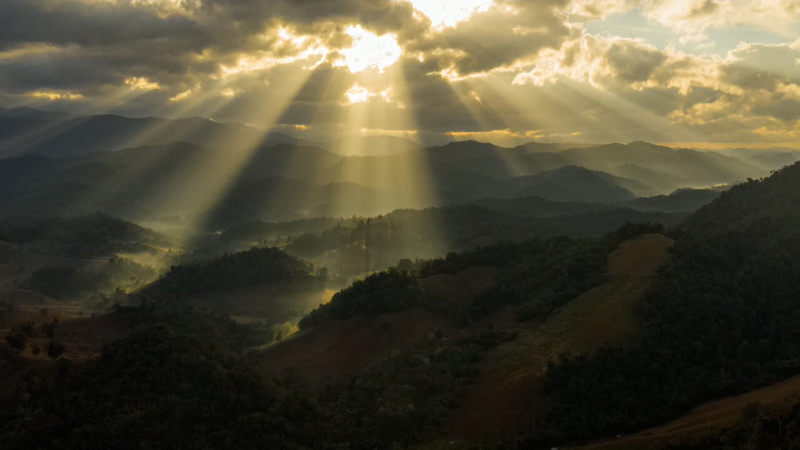
Sky Cover Forecast for Possible Intense Weekend Aurora
Strong aurora activity is possible Saturday night as the Earth faces a stream of solar wind.
The wind is being sent via a coronal hole that provided an impressive display of auroras during Mother's Day weekend
Updated 48 hour loop ending June 3rd showing coronal hole in a prime location to send a stream of solar wind toward Earth. Video courtesy of NASA SDO
The Space Weather Prediction Center continues to forecast a G2 (moderate) geomagnetic storm starting Saturday night. This could last into Sunday night as well.
A G2 level storm will produce visible auroras down to the latitudes of northern New England, northern Michigan and Wyoming. It could be photographed further south where it isn't visible to the naked eye. Of course the stronger the storm turns out to be, the further south it may be seen.
Video courtesy of AccuWeather.com Astronomy Facebook friend Jullie Powell, filmed in eastern Montana Mother's Day Weekend
We start to run into a problem viewing the aurora in far northern latitudes this time of year. These locations are seeing the shortest nights of the year. In fact a place like Edmonton Alberta sees only about 5-6 hours of total darkness. Meanwhile northern Alberta only has a couple hours of darkness. Areas near the Arctic Circle have light in the sky through the entire night now, so aurora viewing won't be better until late summer. The Southern Hemisphere is favored due to the very long nights this time of year.
Viewing Conditions

A storm moving into the Great Lakes Saturday night will produce widespread clouds. But, look for clear skies for at least part of the night in New England and eastern Canada. Areas from the northern Rockies and Pacific Northwest towards Edmonton and Calgary, Canada should have mainly clear skies.
Europe

Much of northern Europe looks to be enjoying clear skies for Saturday night!
Southern Hemisphere

New Zealand and southern Argentina and Chile seem to be the favored locations for aurora viewing Saturday night.
If you missed the Mother's Day Aurora event, heck out some incredible views in this blog post from shortly after the event. This event was a strong (G3 level) geomagnetic storm. Spaceweather.com says the Aurora was photographed as far south as Arkansas and Kansas. Of course if can be seen through photography when it's too dim to be visible to the naked eye.
Fireball turns night to day in Arizona
A very bright fireball was seen all across the Southwest U.S. this morning. No impact was reported form the meteor. But there were reports of the ground and windows shaking.
A statement from NASA says a small asteroid estimated at 5 feet (1-2 meters) in diameter - with a mass of a few tons and a kinetic energy of approximately half a kiloton - entered Earth's atmosphere above Arizona just before 4 a.m. local (MST) time. NASA estimates that the asteroid was moving at about 40,200 miles per hour (64,700 kilometers per hour).
Bill Cooke of NASA's Meteoroid Environment Office says this is the brightest fireball detected in the 8-year history of the NASA's All Sky Fireball Network, an array of cameras that monitors fireball activity across the USA.
Report a Typo