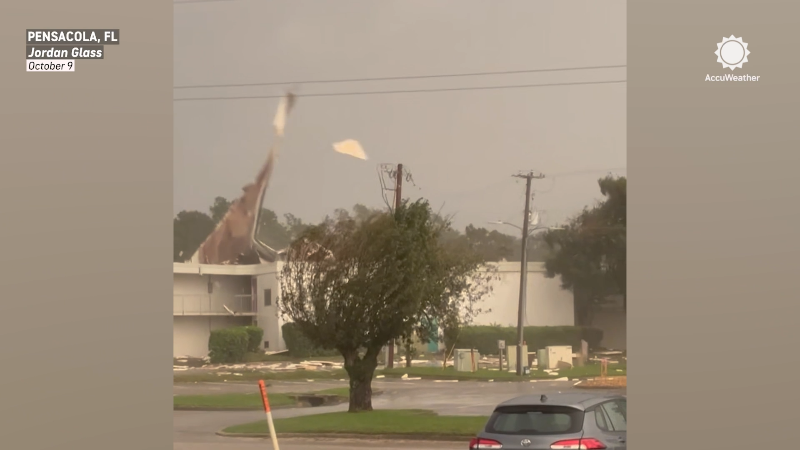
Severe Weather and Your Organization: How Business Leaders Can Better Prepare
Business leaders who understand weather risk management, workforce safety, and operational continuity are better positioned to protect productivity and long-term growth.
>>Learn more about AccuWeather For Business

Severe weather is becoming a consistent operational risk for organizations, not just a seasonal concern. Shifting climate patterns are expanding the geographic reach and frequency of extreme events, directly affecting workforce safety, productivity, and financial performance. Business leaders who use weather data to guide planning and decision-making can reduce disruption, protect employees, and maintain continuity.
Key takeaways:
-- Severe weather risk is expanding, impacting regions and industries previously considered low risk
-- Workforce wellbeing and productivity are directly tied to weather conditions such as heat, air quality, and flooding
-- Financial exposure is rising, even from non-catastrophic events like tidal flooding or smoke disruptions
-- Weather data and forecasting tools enable proactive decisions that reduce downtime
-- Prepared organizations invest in flexibility, communication, and resilience planning to maintain operations
Severe weather preparedness for businesses is no longer optional. As climate patterns shift, organizations across the United States and globally are facing more frequent extreme weather events, from wildfires and hurricanes to flooding and prolonged heatwaves.
Business leaders who understand weather risk management, workforce safety, and operational continuity are better positioned to protect productivity and long-term growth.
How severe weather impacts business operations and workforce productivity
Weather-related disruptions are expanding beyond traditional high-risk regions. Companies that once planned only for hurricanes or wildfires in specific areas are now seeing previously uncommon events affect new locations. This shift is forcing organizations to rethink business continuity planning and employee safety strategies.
Extreme heat, poor air quality from wildfires, and flooding events directly affect workforce health and attendance. Outdoor workers face increased risk of heat-related illness, while indoor employees may still experience disruptions due to transportation issues, school closures, or power outages. These conditions reduce productivity, increase absenteeism, and can impact employee morale and financial stability.
The growing focus on employee wellbeing is also changing how organizations approach severe weather planning. Employers are recognizing that protecting workforce health is directly tied to maintaining operational efficiency. Businesses that fail to address these risks may see longer recovery times and higher costs.
The economic impact of extreme weather on organizations
Recent severe weather events highlight the financial risks businesses face. Wildfires in California have caused tens of billions of dollars in damages, displacing workers and disrupting local economies. Flooding in regions not historically prone to such events, including parts of Europe and the southeastern United States, has interrupted supply chains, manufacturing, agriculture, and tourism.
Even non-catastrophic weather events can have a measurable impact. Tidal flooding in coastal regions can block commuting routes and reduce customer traffic. Smoke from distant wildfires can disrupt air travel and logistics networks across entire continents. Heatwaves can alter work schedules, increase energy costs, and strain infrastructure.
<<Why take unnecessary risks? Contact AccuWeather today to get AccuWeather's SkyGuard® Severe Weather Warnings to better prepare your business and keep your employees safer for all severe weather threats.>>

Storm clouds form over a public park as thunderstorms approach the region, Saturday, April 25, 2026, in Plano, Texas. (AP Photo/Tony Gutierrez)
Why weather risk modeling and forecasting matter
Modern business resilience depends on the ability to anticipate and respond to weather disruptions. Weather risk modeling allows organizations to quantify potential impacts on workforce availability, supply chains, and revenue. With advanced forecasting tools, companies can make data-driven decisions that minimize downtime and protect employees.
Organizations that integrate weather data into daily operations can adjust staffing levels, reroute logistics, and implement safety measures before conditions worsen. This proactive approach reduces uncertainty and improves overall business continuity.
How business leaders can prepare for severe weather
Preparing for extreme weather requires a comprehensive strategy that includes workforce protection, infrastructure planning, and real-time decision support. Leaders should evaluate their exposure to different weather risks based on geography, industry, and workforce distribution.
Investing in weather forecasting technology and alert systems enables faster response times. Flexible work policies, including remote work options and adjusted schedules, help maintain productivity during disruptions. Clear communication plans ensure employees understand safety protocols and expectations.
Organizations should also review insurance coverage and financial risk exposure, as the cost of rebuilding a workforce and restoring operations can rival physical infrastructure damage. Training programs and emergency preparedness drills further strengthen resilience.
The future of weather resilience in business
As climate trends continue to evolve, severe weather preparedness will become a core component of business strategy. Companies that prioritize workforce safety, leverage weather data, and build adaptable operations will gain a competitive advantage.
Business leaders who act now can reduce risk, protect employees, and maintain continuity even in the face of increasing environmental uncertainty.
Take action to strengthen your organization’s weather preparedness
– Assess your current business continuity and severe weather response plans to identify gaps
– Invest in reliable weather forecasting and risk management solutions to improve decision-making
– Develop flexible workforce policies that support employee safety and productivity during disruptions-
– Enhance communication strategies to keep employees informed before, during, and after weather events
– Review insurance and financial planning to account for both physical and workforce-related losses
Start building a more resilient organization today by making weather preparedness a strategic priority.
AccuWeather’s SkyGuard® Severe Weather Warnings
Be proactive with AccuWeather SkyGuard® Severe Weather Warnings with proven Superior Accuracy™ AccuWeather’s SkyGuard warnings deliver hyperlocal, site-specific alerts and warnings with often more advance notice, before severe weather hits, giving you more time to prepare.
As an example of AccuWeather’s proven Superior Accuracy™, for tornadoes, on average, AccuWeather provides 16 minutes of advance notice compared to an average of only eight minutes from the National Weather Service. In some cases, we often provide much more advance notice.
Businesses that invest in AccuWeather’s SkyGuard Severe Weather Warnings also get access to a team of expert severe weather meteorologists, 24x7x365. AccuWeather does not just send you a warning; we confirm that you have received it, so you can make the best weather-impacted decisions for your business every time.
<<Why take unnecessary risks? Contact AccuWeather today to get AccuWeather's SkyGuard® Severe Weather Warnings to better prepare your business and keep your employees safer for all severe weather threats.>>
Report a Typo