Booming sea turtle nesting season suffers devastating setback from Bertha
After a promising season marked by soaring nest counts and rare milestones across the Southeast, Tropical Storm Bertha washed away nests, and left volunteers racing to save hatchlings along Florida’s Gulf Coast.
Despite Tropical Storm Bertha washing away some sea turtle nests in Florida, the summer of 2026 is already breaking records for the number of nests throughout the Southeast.
Sea turtles were having a remarkable nesting season across the Southeast in 2026, with beaches from Florida to Virginia reporting promising numbers and developments.
Then Tropical Storm Bertha arrived.

Sea turtle hatchlings make their way to the ocean in St. George Island, Florida in July 2026. (Image credit: Kimberly Crossen/St. George Island Sea Turtle Patrol)
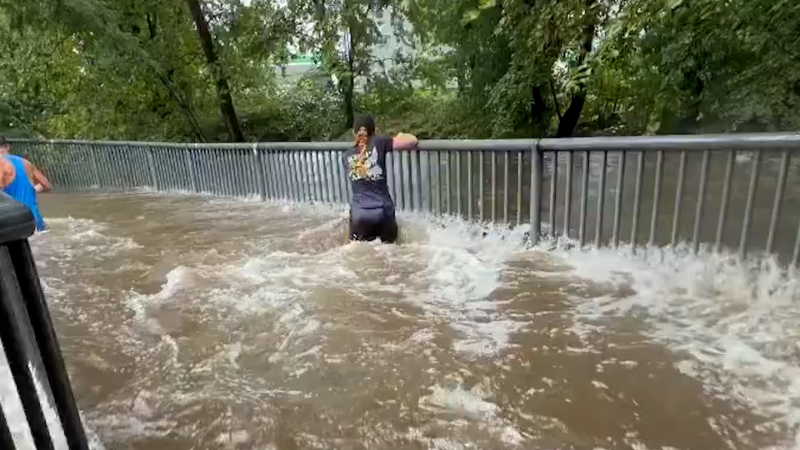
Coastal flooding, storm surge, beach erosion and high surf caused widespread damage to nests along Florida’s Gulf Coast, wiping out weeks of progress in some areas and leaving sea turtle patrol groups heartbroken.
The Destin-Fort Walton Beach Sea Turtle Patrol said only four of the area’s 22 nests survived the storm.
“GPS coordinates are taken of each nest along with beach measurements, distance from the nest to the dune and water, so we are hoping we may be able to locate the eggs again and re-mark the nest for evaluation,” the group said.

A washed out sea turtle nest in Alligator Point, Florida after Bertha. (Image credit: Alligator Point Sea Turtle Patrol)
Farther east, the Alligator Point Sea Turtle Patrol described the second day of Bertha’s impacts as “brutal,” reporting that every monitored nest was either inundated by storm surge or completely washed away.
“We’re heartbroken,” the organization wrote on Facebook.

Sea turtle nests destroyed by high surf caused by Tropical Storm Bertha on St. George Island, Florida. (Image credit: Kimberly Crossen/St. George Island Sea Turtle Patrol)
Although sea turtle nests can sometimes survive waves washing over them, prolonged flooding can be fatal. Once water inundates a nest and fills the chamber, the eggs can suffocate.
At St. George Island, the storm also flooded and destroyed nests, but volunteers were able to rescue many hatchlings on Wednesday.
There were also signs of hope: Two new nests were laid despite the storm.
“So while this storm has taken its toll, our nesting mothers are still coming ashore, and we will continue doing everything we can to protect every nest and every hatchling,” the St. George Island Sea Turtle Patrol wrote on Facebook.

The Sea Turtle Patrol Hilton Head Island celebrates its 400th sea turtle nest this season in July 2026. (Image credit: Sea Turtle Patrol Hilton Head Island )
The damage came during what had been an extraordinary nesting year across much of the Southeast.
Hilton Head Island is nearing a record nesting season. Sea Turtle Patrol Hilton Head Island reported its 400th nest on July 22, nearly double the 212 nests recorded by the same point last year. The island finished the 2025 season with 237 nests.
With several weeks of nesting still ahead, Hilton Head could challenge its all-time record of 464 nests, set in 2019.

A sea turtle makes its way to the ocean for the first time on the beaches of Hilton Head Island, South Carolina in July 2026. (Image: Geoff Cornish/AccuWeather)
Florida was also on pace for one of its strongest loggerhead nesting seasons. As of June 30, the Florida Fish and Wildlife Conservation Commission had counted more than 94,000 loggerhead nests statewide, putting the season within reach of the state record.
The nesting season also produced a historic first farther north. For the first time on record, a leatherback sea turtle nested on Virginia’s shores, laying her eggs at Naval Air Station Oceana Dam Neck Annex, according to the U.S. Fish and Wildlife Service.

Leatherback sea turtle tracks and a nest in the sand at Naval Air Station Oceana Dam Neck Annex in Virginia. (Photo courtesy of NAS Oceana)
What's driving the increase in sea turtle nests this season?
Researchers say the surge in nesting may be tied to several factors.
Sea turtles typically follow cyclical nesting patterns. Females may lay multiple nests during one season before taking several years off, and 2026 appears to be a nesting year for a larger population of turtles.
Warmer ocean water may also be encouraging turtles to arrive earlier, extending the nesting season.
Long-term conservation efforts are playing a role as well. Restrictions on bright beachfront lighting help prevent hatchlings from becoming disoriented, while protections for nesting areas and efforts offshore have improved survival prospects for adult turtles.
Tropical systems are a natural threat during sea turtle nesting season, and not every flooded nest will necessarily be lost. However, severe erosion, prolonged inundation and storm surge can expose eggs, collapse nest chambers or wash entire nests out to sea.
Even after Bertha’s destruction, nesting mothers continued to return to Florida beaches, offering hope that the season can recover.
For patrol groups along the coast, the work now shifts to locating damaged nests, evaluating which eggs may have survived and helping newly hatched turtles reach the water safely.
AccuWeather Meteorologist Geoff Cornish contributed to this report.
Report a Typo