Lala Causes an Estimated $3 to $5 Billion in Total Damage and Economic Loss in Hawaii
AccuWeather® experts say areas of catastrophic flooding, widespread power outages and short-term tourism losses are among the biggest drivers of the preliminary estimate
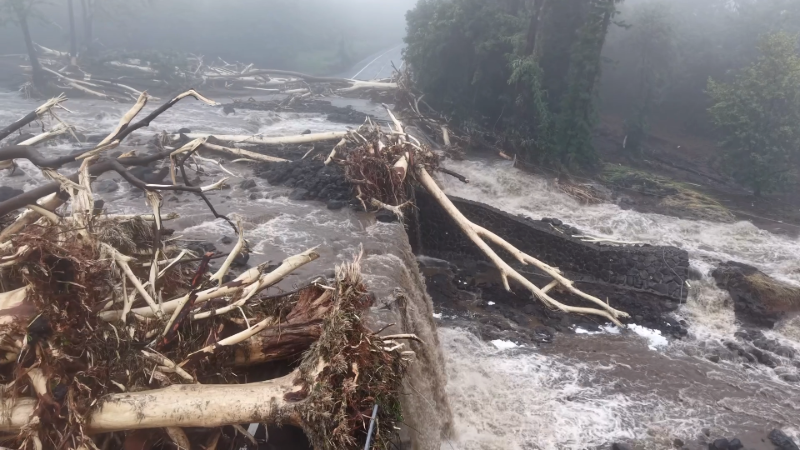
AccuWeather® Global Weather Center – August 17, 2026 – Persistent downpours dropped more than 40 inches of rain in some areas of Hawaii’s Big Island, with rainfall rates reaching 4 to 5 inches per hour, triggering catastrophic flash flooding in some communities and mudslides in steep terrain. As a result, AccuWeather experts say Hurricane Lala caused an estimated $3 to 5 billion in total damage and economic loss in Hawaii over the weekend, according to a preliminary estimate.
“Flooding, some of it severe, was the biggest impact from Lala, but widespread power outages, travel disruptions, damage to property and infrastructure, business interruptions and tourism losses all add to the economic toll,” AccuWeather Chief Meteorologist Jonathan Porter said. “The impact to the tourism industry could be prolonged by power outages, and damages to roads.”
Lala formed into a tropical storm early Thursday southeast of Hawaii and strengthened into a Category 1 hurricane early Saturday with maximum sustained winds of 75 mph. It passed about 30 miles south of the Big Island Saturday bringing damaging winds that brought down trees and power lines, blocked roads and contributed to widespread outages. At one point, nearly 70 percent of Hawaii County was without power. At least two homes were reportedly washed away in the southern part of the Big Island, while damaging wind gusts of 60 to 80 mph downed trees and power lines. Hundreds of flight cancellations and delays at several airports across the islands since Friday added to the travel and tourism disruption.
“The impact from Lala appears far different from the 2023 Maui wildfires, which caused $14 billion to $16 billion in total damage and economic loss and had impacts on Hawaii’s economy and tourism for years. Lala is expected to have a tail of negative impacts to tourism for the next few weeks and some impact into October, rather than years, although communities hit by catastrophic flooding will face a longer recovery,” added Porter.
This is a preliminary estimate, as the storm effects continue to be felt, and some areas have not yet reported complete information about damage, injuries and other impacts.


Click here for more AccuWeather Maps and Graphics
About Total Damage and Economic Impact Estimates
AccuWeather incorporates independent methods to evaluate all direct and indirect impacts of the storm, includes both insured and uninsured losses and is based on a variety of sources, statistics and unique techniques AccuWeather uses to estimate the damage. It includes damage to property, job and wage losses, crops, infrastructure, interruption of the supply chain, auxiliary business losses and flight delays. The estimate also accounts for the costs of evacuations, relocations, emergency management and the extraordinary government expenses for cleanup operations and the long-term effects on business logistics, transportation and tourism as well as the long-term and short-term health effects and the medical and other expenses of unreported deaths and injuries.
Water damage is especially costly and is often not covered by standard homeowners insurance. Many people are underinsured for flood damage. An estimated 4% of U.S. homeowners have flood insurance through the National Flood Insurance Program, though participation is often higher in communities near waterways.
AccuWeather is the trusted source for total damage and economic loss estimates for weather disasters in the United States. Our recognized experts incorporate independent methods to evaluate all direct and indirect impacts of extreme weather events. In 2017, AccuWeather first issued a widely quoted preliminary estimate for total damage and economic loss during catastrophic flooding from Hurricane Harvey along the Gulf coast, which helped people in the impacted area, and across the country to better understand the magnitude of the disaster