How Utilities Use Real-Time Lightning Data to Protect Crews, Cut Truck Rolls, and Restore Power Faster
The AccuLightning Network™ delivers strike location and timing that plugs directly into utility operations, turning lightning from a source of uncertainty into a decision input.
>>Learn more about AccuWeather For Business

A utility worker looks to repair lines with the roof of Kelley Electric draped on the lines after downtown Moundville was hit by severe weather, Wednesday, March 17, 2021, in Moundville, Ala. Possible tornadoes knocked down trees, toppled power lines and damaged homes in rural Chilton County and the Alabama communities of Burnsville and Moundville, where power was out and trees blocked a main highway. (AP Photo/Vasha Hunt)
Executive Summary
When a breaker locks out during a storm, an operator has a decision to make: reclose, or roll a truck. When lightning is bearing down on a transmission crew, dispatch has another: stand them down — and then decide when it’s safe to spin them back up. Every one of these calls is faster and safer with precise, real-time lightning strike data. The AccuLightning Network™ delivers strike location and timing that plugs directly into utility operations, turning lightning from a source of uncertainty into a decision input.
Key Takeaways
-- Standing a crew down when a storm approaches is the easy part. The costly part is the restart.
-- Most operations centers wait out the standard 30-minute all-clear using whatever free lightning feed they have — feeds that can miss strikes or show phantom ones, forcing dispatch to either eat extra downtime or restart on unreliable information.
-- With the AccuLightning Network™, dispatch pinpoints the exact time and location of the last relevant strike and puts crews back to work right at the 30-minute mark. Less downtime, less operational risk, one data source.
Reclose-or-Roll: A Two-Minute Decision Instead of a Truck Roll
A recloser operates. A breaker locks out. No obvious cause. Without lightning correlation, the only way to know is to roll a crew. With it, the operator overlays the fault time and location against strike data and makes the call in about two minutes. A confirmed strike near the fault supports reclosing; no lightning activity means something else is on the line — possibly a downed conductor that should never be re-energized. One avoided truck roll pays for itself; one avoided wire-down energization is worth far more.

Lightning flashes over a Florida beach. (Getty Images/Pola Damonte)
Targeted Patrols: Search a Few Spans, Not a Whole Circuit
After a lightning-caused outage, crews traditionally patrol the entire circuit to find damage. High-amplitude strike data narrows the search to the spans nearest the strike, so crews inspect a specific section instead of driving the whole line. Faster damage location, faster restoration.
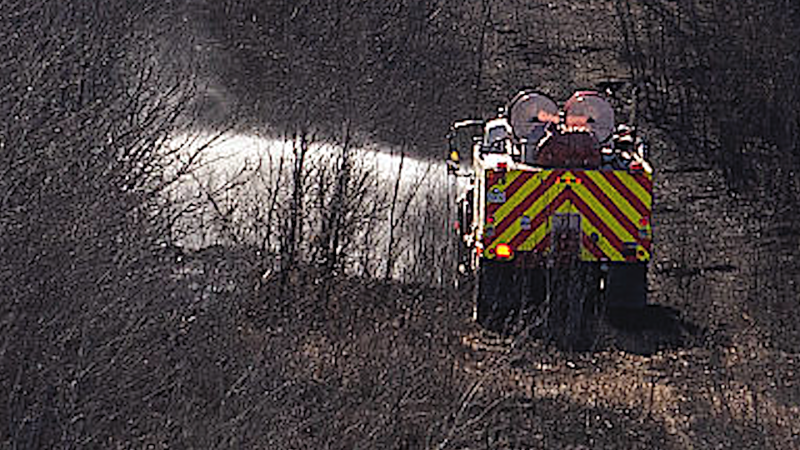
Post-Storm Assessment: Prioritize Inspections and Flag Wildfire Risk
Cloud-to-ground strikes are the ones that damage infrastructure — and the AccuLightning Network™ records where every one landed. After a storm, utilities use historical strike data to prioritize equipment inspections, track cumulative stress on surge arresters, and identify where lightning may have sparked wildfire ignitions near assets and rights-of-way.
Get the Data
AccuLightning Network™ data is available two ways: the AccuWeather for Business Portal (https://business.accuweather.com/lightning-data-suite/) for map-based monitoring, and the AccuLightning Network™ API (https://apidev.accuweather.com/developers/lightning/general) for integration into GIS and outage management systems. Eligible organizations that host a small, low-maintenance ALN sensor receive access at no cost while strengthening the network’s coverage. Contact the AccuWeather for Business team to talk through which fits your operation.
Report a Typo